Categories List

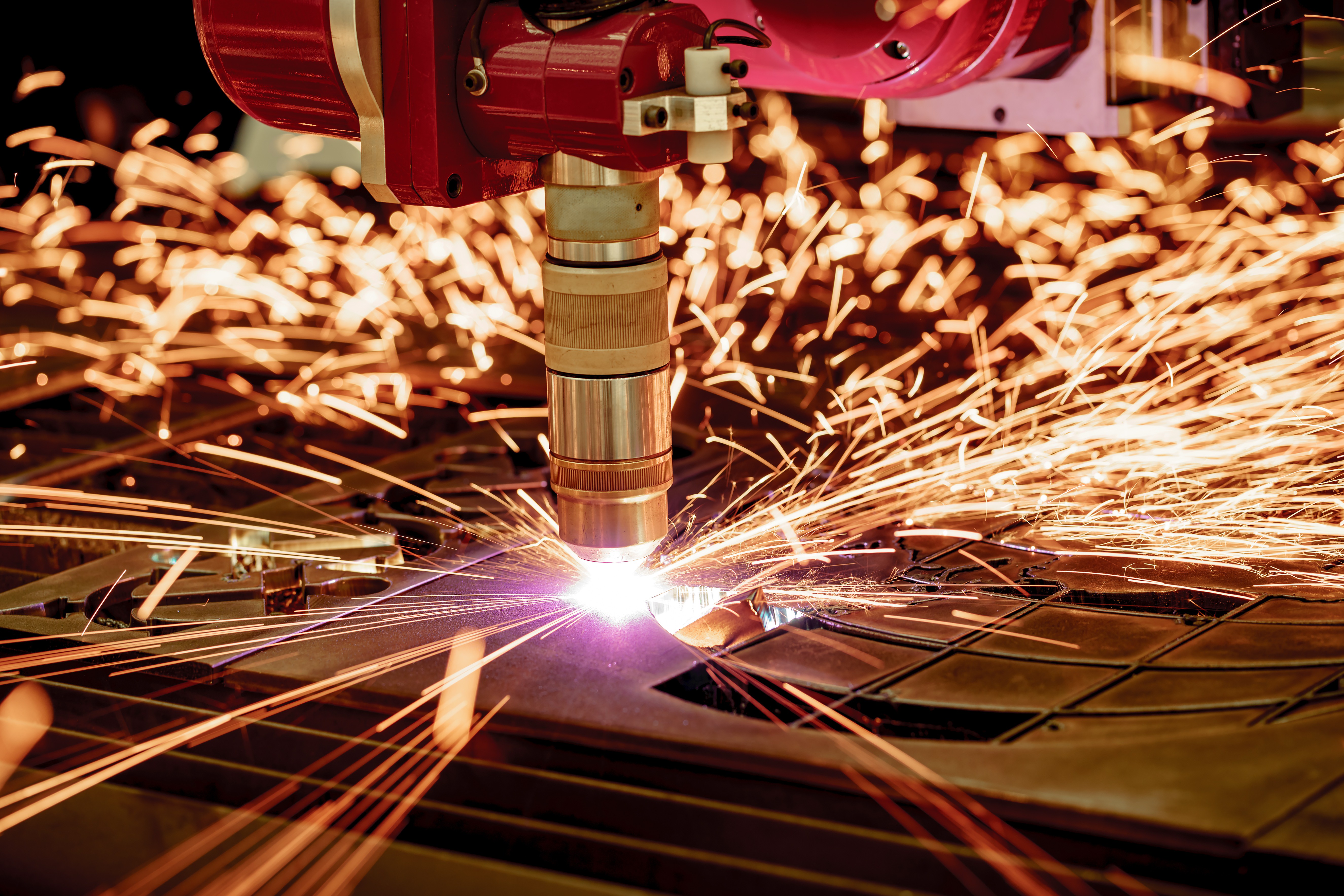
Choosing the right laser cutting machine is critical for performance, precision, and long-term ROI—yet technical specs can be overwhelming. Whether you're an operator optimizing daily throughput, a technical evaluator comparing system capabilities, a decision-maker balancing budget and scalability, or a maintenance professional assessing serviceability, understanding which specs truly matter most is essential. Power output, beam quality, positioning accuracy, cutting speed, material compatibility, and software integration aren’t just numbers—they directly impact cut quality, uptime, and operational efficiency. In this guide, we cut through the noise to highlight the key technical specifications that drive real-world performance for any Laser cutting machine.
Beam Quality (M²) and Its Direct Impact on Edge Finish & Thickness Capacity
Beam quality—expressed as the M² factor—is arguably the most underappreciated yet decisive spec in evaluating a laser cutting machine. While power output often dominates procurement discussions, M² quantifies how tightly the laser beam can be focused. A lower M² value (e.g.,<1.1 for fiber lasers) indicates near-diffraction-limited performance, enabling finer kerf widths, steeper sidewall angles, and superior edge perpendicularity—especially critical when cutting stainless steel above 12 mm or aluminum over 8 mm. Operators routinely observe up to 30% reduction in dross formation and 40% faster piercing times on thick-section materials when comparing M² 1.05 versus M² 1.3 systems under identical power and assist gas conditions.
Technical evaluators should cross-reference M² with beam parameter product (BPP), measured in mm·mrad—a more intuitive metric for optical coupling efficiency into focusing heads. Industry benchmarks show top-tier industrial fiber sources maintain BPP ≤ 2.5 mm·mrad at full rated power, whereas entry-level units may exceed 4.0 mm·mrad above 75% load, accelerating lens degradation and requiring more frequent collimation checks. For maintenance teams, consistent M² stability across the laser’s lifetime correlates strongly with diode stack health and cooling system integrity; sudden M² drift (>0.15 increment over 6 months) often precedes pump diode failure.
Decision-makers benefit from recognizing that high beam quality extends usable nozzle life by reducing thermal loading on consumables and enables tighter nesting of parts—boosting sheet utilization by 8–12% in high-mix job shops. Unlike power upgrades, which scale linearly with electricity and cooling costs, beam quality optimization delivers nonlinear returns in cut consistency and secondary finishing reduction.
Positioning Accuracy, Repeatability, and Dynamic Performance Under Load
Positioning accuracy (typically ±0.03 mm over 1 m) and repeatability (±0.01 mm) define geometric fidelity—but real-world performance hinges on dynamic behavior: acceleration, deceleration, and contouring stability at working speeds. A machine rated for 1.5 g acceleration may deliver only 0.8 g sustained during complex 2D contours due to servo tuning limitations or mechanical resonance. Operators experience this as “corner rounding” or inconsistent kerf width on tight radii—issues resolved not by slowing feed rates, but by selecting gantries with optimized mass-to-stiffness ratios and dual-loop feedback (linear encoders + motor resolvers).
Technical evaluators must verify positioning specs under ISO 230-2 test conditions—not manufacturer-claimed “no-load” values. Look for published data showing bidirectional repeatability across full travel, including Z-axis (for auto-focus height control). Systems with active vibration damping or granite composite bases demonstrate<0.005 mm thermal drift per hour—critical for unattended overnight runs where dimensional drift accumulates across hundreds of parts.
For maintenance professionals, high-repeatability motion systems reduce wear on timing belts, rack-and-pinion drives, and linear guides. Machines with preloaded crossed-roller bearings and direct-drive motors report 40% fewer alignment interventions annually versus belt-driven alternatives. Decision-makers gain scalability here: high-dynamic machines support future upgrades to higher-power lasers without re-engineering the motion platform—preserving capital investment.
Material Compatibility Beyond Thickness Charts: Gas, Nozzle, and Process Intelligence
Standard thickness charts list “max cut capability” for mild steel, stainless, and aluminum—but real-world material compatibility depends on integrated process intelligence. A modern laser cutting machine must dynamically adjust focal position, nozzle standoff, gas pressure, and pulse parameters based on real-time material recognition (via integrated camera or spectral analysis) and thermal feedback. For example, cutting galvanized steel requires nitrogen-assisted piercing followed by oxygen switching mid-cut to prevent zinc oxide buildup—only possible with closed-loop gas control valves and sub-100ms response time.
Operators benefit from intelligent nozzle detection: automatic compensation for wear-induced kerf widening, or real-time collision avoidance during nested part cutting. Technical evaluators should assess whether the laser cutting machine supports interchangeable nozzle geometries (conical vs. straight bore) and adaptive pressure mapping—key for achieving burr-free edges on brass or titanium alloys. Maintenance teams rely on modular gas delivery manifolds with quick-disconnect fittings and leak-test ports, reducing downtime during changeovers from 45 minutes to under 8 minutes.
Software Integration Architecture: From CAD Import to Predictive Maintenance
The laser cutting machine’s software stack is no longer just a controller interface—it’s the central nervous system for production intelligence. Modern platforms must support native import of STEP, IGES, and Parasolid files (not just DXF), preserving GD&T annotations for automated tolerance-based nesting. Operators use cloud-synced job libraries to recall optimal parameters for legacy parts—cutting setup time by 65% on repeat orders. Technical evaluators validate API access for MES/ERP integration (RESTful endpoints for job dispatch, status polling, and real-time OEE reporting), ensuring traceability down to individual cut segments.
Maintenance professionals depend on embedded diagnostics: harmonic analysis of motor currents to predict bearing wear, optical power decay trending against cutting performance logs, and automated calibration sequence logging. Decision-makers gain ROI through predictive maintenance alerts—reducing unplanned downtime by up to 37% and extending consumable life by 22% via usage-based replacement scheduling rather than fixed intervals.
Power Output: Not Just Watts—But Stability, Modulation, and Thermal Management
While nominal power (e.g., 6 kW, 12 kW) sets theoretical capacity, effective power delivery depends on three interdependent factors: power stability (<±1% 8="" variation="" over="" modulation="" bandwidth="">5 kHz for fine feature control), and thermal management design. A 10 kW laser with poor cooling may derate to 7.2 kW after 20 minutes of continuous operation—causing inconsistent penetration in multi-layer cutting. Operators notice this as variable edge hardness or increased post-processing requirements.
Technical evaluators should request thermal imaging reports showing heat distribution across the laser source housing and beam delivery path under sustained load. Systems using dual-circuit chillers (separate loops for laser diodes and optics) maintain power stability >98% over shift-long operation. Maintenance teams benefit from modular cooling modules with self-diagnostic flow sensors—enabling rapid isolation of clogged filters or failing pumps without full system shutdown.
Decision-makers achieve better TCO by prioritizing power *efficiency* (kW input per kW optical output) over raw output. High-efficiency sources (≥45% wall-plug efficiency) reduce electrical demand, cooling infrastructure costs, and facility footprint—often offsetting premium pricing within 14 months of operation.
Selecting the right laser cutting machine demands moving beyond brochure specs to evaluate how each parameter interacts in your specific production environment. Beam quality defines edge integrity; motion dynamics govern geometric fidelity; intelligent material handling ensures repeatability across alloys; software integration unlocks data-driven optimization; and thermal-aware power delivery sustains throughput. These are not isolated metrics—they form an interdependent performance ecosystem. When evaluating any laser cutting machine, prioritize systems validated with real-world application testing, backed by field service engineers with documented expertise in your material mix and part complexity. Ready to align your next investment with measurable operational gains? Get a tailored specification review and process validation quote today.
Leave A Reply
LOGO
This stunning beach house property is a true oasis, nestled in a serene coastal community with direct access to the beach.
Opening Hours
Monday - Friday : 9AM to 5PM
Sunday: Closed
Closed during holidays
Contact
West Street, Melbourne Victoria 3000 Australia