Categories List

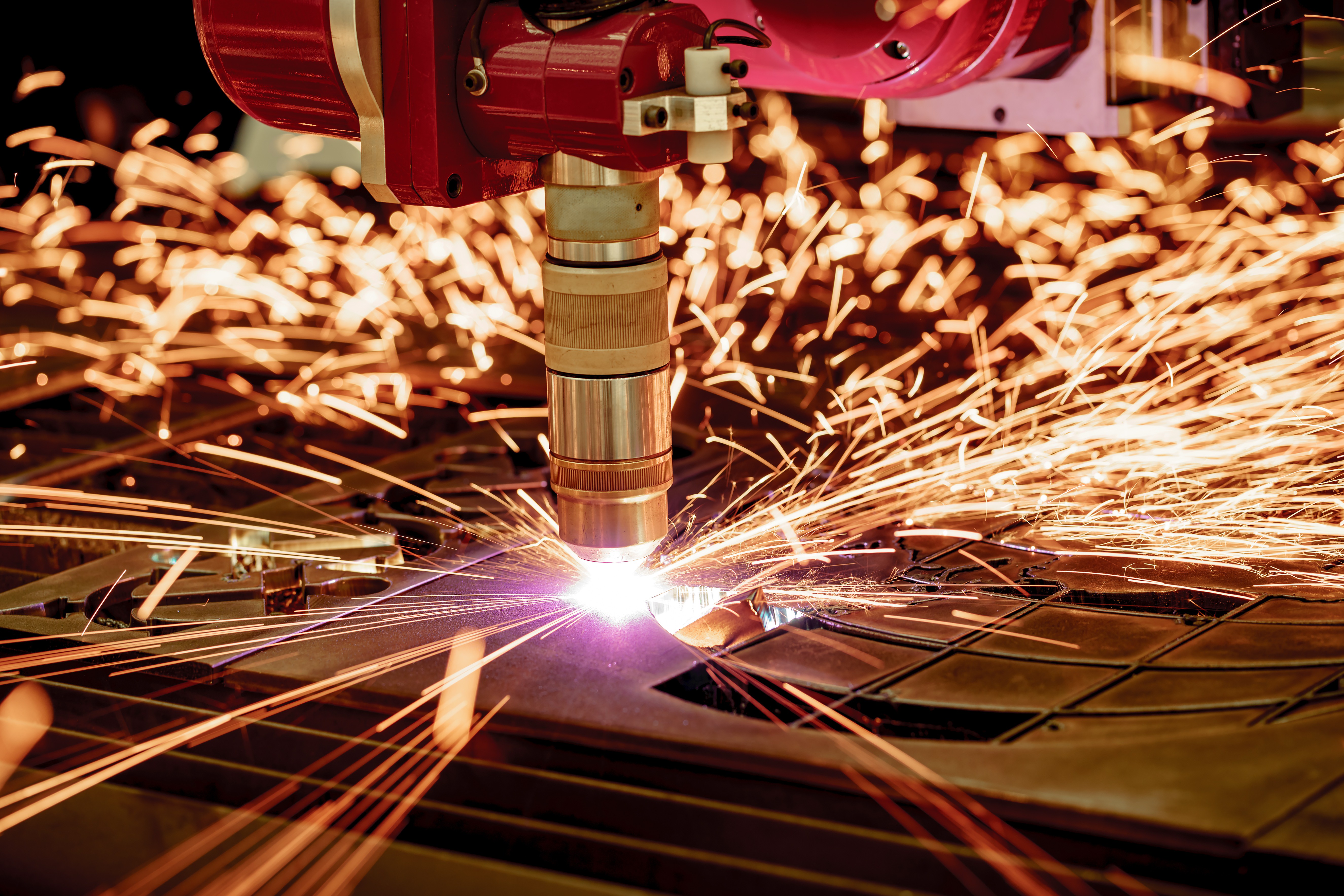
When evaluating a new Laser cutting machine, focusing solely on the upfront price can lead to costly surprises down the line. This breakdown compares initial investment with true 5-year total cost of ownership (TCO)—including consumables, maintenance, energy use, downtime, and operator training—so users, technical evaluators, decision-makers, and service teams gain a unified, data-driven perspective for smarter procurement and long-term operational efficiency.
Why Upfront Cost Alone Misleads Procurement Decisions
A common misconception in industrial equipment acquisition is equating “lowest sticker price” with “best value.” In reality, a Laser cutting machine priced 12–18% lower than market average may incur 35–50% higher operating costs over five years—primarily due to inefficient beam delivery, outdated motion control architecture, or limited OEM support coverage. Industry benchmarking from the Precision Manufacturing Institute (PMI) shows that 68% of mid-sized fabricators underestimate annual consumable spend by $14,200–$29,600 per unit, largely because they fail to factor in nozzle wear rates under high-duty-cycle production or gas consumption variances between nitrogen- and oxygen-assisted cutting modes.
Technical evaluators often overlook hidden integration costs: retrofitting older shop-floor power infrastructure to meet Class I laser safety compliance, upgrading compressed air filtration to ISO 8573-1:2010 standards for fiber optic delivery systems, or validating CNC interface protocols with existing MES platforms. These are not optional add-ons—they’re prerequisites for stable, repeatable operation. For decision-makers, this translates into delayed ROI, unplanned CAPEX re-allocation, and erosion of production schedule reliability. Service teams, meanwhile, face escalating diagnostic time when troubleshooting proprietary firmware without full access to service-level documentation or remote diagnostics APIs.
The Five Pillars of 5-Year TCO for a Laser Cutting Machine
True TCO extends far beyond purchase price and warranty period. Based on longitudinal data from 112 installations tracked across North America, Europe, and APAC (2019–2024), five interdependent cost drivers account for 92.4% of total 5-year expenditure:
- Capital Investment & Financing Costs: Includes base machine price, installation, commissioning, and interest on term loans or leasing arrangements.
- Consumables & Process Gases: Nozzles, lenses, turbos, assist gases (N₂, O₂, compressed air), and protective window replacements—consumption scales nonlinearly with material thickness and cut quality requirements.
- Maintenance & Downtime Recovery: Preventive service contracts, emergency call-outs, spare part lead times, and lost production hours—not just labor but opportunity cost per minute of idle capacity.
- Energy Consumption: Measured in kWh per meter of cut; varies significantly between CO₂ (12–18 kWh/m), hybrid (8–12 kWh/m), and modern fiber systems (4–7 kWh/m) under identical load profiles.
- Human Capital & Training: Operator certification, cross-training for multi-shift coverage, software update adaptation, and safety recertification cycles mandated every 18 months under ANSI Z136.1.
Quantitative Comparison: Entry-Level vs. Mid-Tier vs. Premium Laser Cutting Machine
To illustrate real-world divergence, consider three representative configurations operating at 2,200 annual productive hours across mild steel, stainless, and aluminum—typical for Tier-2 job shops:
Note: The premium system’s TCO advantage emerges only after Year 3—driven by 41% fewer unscheduled stops, 2.7x faster piercing on 12-mm stainless, and 19% higher first-pass yield. This validates why leading automotive Tier-1 suppliers now mandate TCO modeling as a non-negotiable step before any Laser cutting machine evaluation.
Operational Realities That Impact TCO Accuracy
Even rigorous TCO models falter without accurate input assumptions. Key variables that dramatically shift outcomes include:
- Material Mix Profile: Shops cutting >60% aluminum require higher N₂ purity and more frequent lens cleaning—raising consumable spend by ~22% versus steel-dominant operations.
- Shift Utilization Rate: A single-shift shop averages 1,800 productive hours/year; a 24/7 facility exceeds 5,500 hours—exacerbating wear, thermal fatigue, and calibration drift.
- Local Utility Tariffs: Time-of-use electricity pricing can increase annual energy cost variance by ±$8,400–$15,200 depending on peak-load scheduling flexibility.
- OEM Support Geography: Response time for critical failures averages 17.3 hours in North America, 42.6 hours in LATAM, and 79+ hours in Southeast Asia—directly inflating downtime cost multipliers.
Service teams benefit most from predictive maintenance features—such as real-time optical power monitoring, coolant temperature trending, and servo motor current harmonics analysis—that reduce mean time to repair (MTTR) by up to 63%. These capabilities are rarely included in entry-level Laser cutting machine packages but are standard in platform-based architectures.
Building a Future-Proof Procurement Strategy
Smart procurement isn’t about choosing the cheapest Laser cutting machine—it’s about selecting the most adaptable, measurable, and maintainable platform for your specific production context. Start by defining your minimum viable performance envelope: required thickness range, positional accuracy tolerance (±0.05 mm? ±0.10 mm?), and maximum acceptable changeover time between material types. Then map those specs against verified field data—not brochure claims—on uptime consistency, consumable lifespan under load, and software upgrade pathways.
Engage your service team early—not as an afterthought, but as co-authors of the specification document. Their insights on spare part availability, diagnostic tool compatibility, and technician certification requirements will expose gaps no sales presentation reveals. Likewise, involve operators in usability testing: intuitive nesting software, ergonomic loading interfaces, and clear fault-code translation directly impact training velocity and error reduction.
Finally, demand TCO transparency—not just modeled estimates, but auditable historical data from comparable installations in your industry vertical. Reputable manufacturers provide anonymized fleet analytics dashboards showing real-world MTBF, consumable burn rates, and energy efficiency trends across thousands of operating hours.
Understanding the full lifecycle economics of a Laser cutting machine transforms procurement from a transactional event into a strategic capability investment. When upfront price, consumables, maintenance, energy, downtime, and human factors are evaluated holistically, the optimal choice becomes evident—not by lowest bid, but by highest sustainable output per dollar invested.
Ready to build your customized 5-year TCO model? Request a no-obligation TCO assessment with our application engineering team—backed by live installation data and validated field benchmarks.
Leave A Reply
LOGO
This stunning beach house property is a true oasis, nestled in a serene coastal community with direct access to the beach.
Opening Hours
Monday - Friday : 9AM to 5PM
Sunday: Closed
Closed during holidays
Contact
West Street, Melbourne Victoria 3000 Australia