Categories List

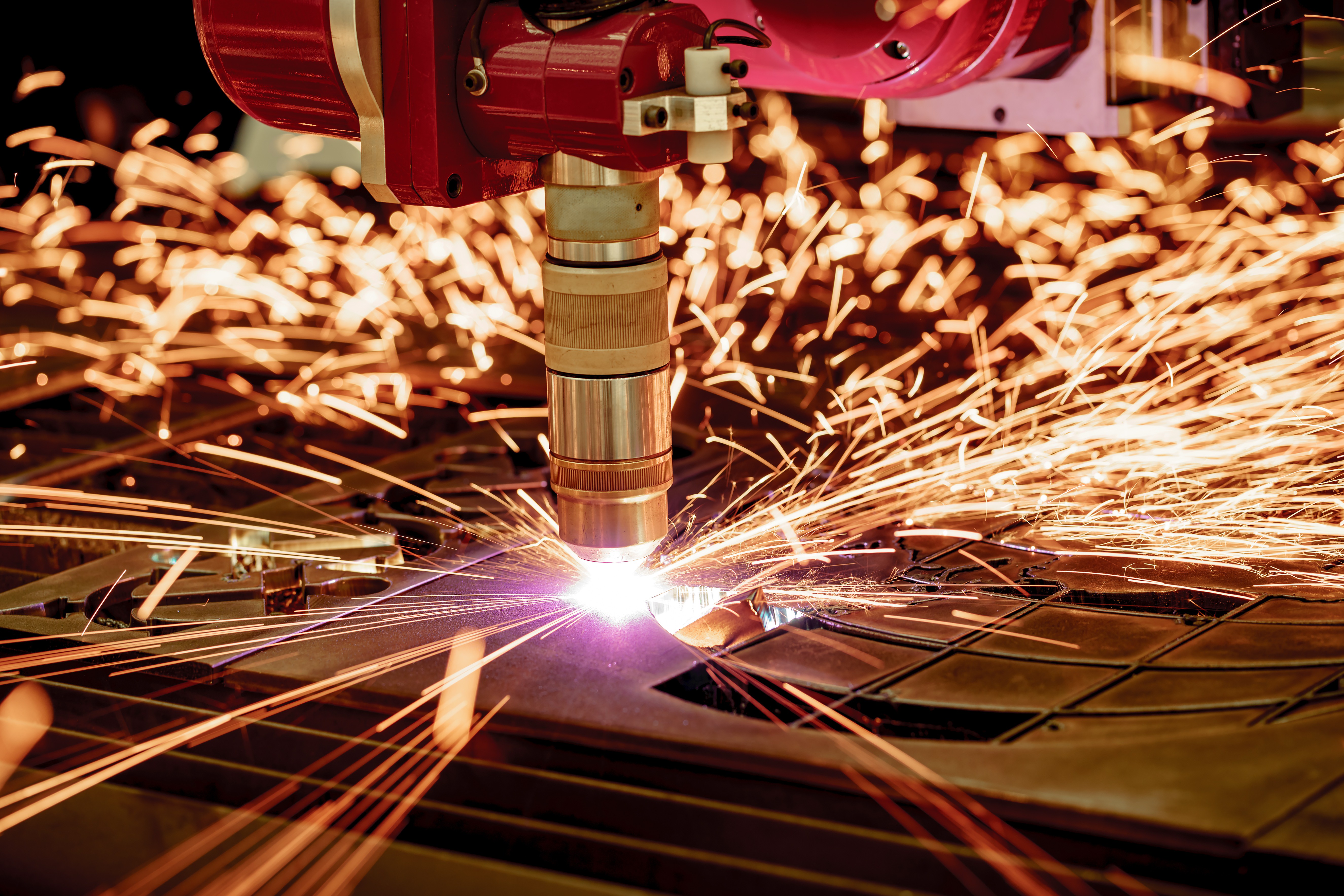
Operating a laser cutting machine demands more than technical skill—it requires unwavering commitment to safety. Every incident involving a laser cutting machine is preventable with strict adherence to OSHA-compliant protocols. This guide outlines essential safety practices every operator, technician, evaluator, and maintenance professional must know—from proper PPE and interlock checks to emergency stop procedures and hazard zone management. Whether you're running daily operations, assessing system compliance, or supporting equipment longevity, these protocols protect lives, ensure regulatory alignment, and uphold operational integrity. Don’t wait for near-misses—embed these standards into your workflow today.
Understanding the Core Hazards of Laser Cutting Machines
A laser cutting machine integrates high-power CO₂, fiber, or Nd:YAG lasers with precision motion control systems—capable of delivering beam intensities exceeding 10⁶ W/cm². While this enables micron-level accuracy in metal, plastic, and composite processing, it also introduces four primary hazard categories recognized by OSHA 29 CFR 1910.252 and ANSI Z136.1: optical radiation (Class 4 laser exposure), thermal burns from reflected or scattered beams, hazardous fumes from vaporized materials (e.g., hexavalent chromium from stainless steel, cyanide compounds from acrylics), and mechanical risks including pinch points, moving gantries, and unguarded auxiliary systems. According to the U.S. Bureau of Labor Statistics, over 62% of reported laser-related injuries between 2018–2023 occurred during setup, cleaning, or maintenance—not active cutting—highlighting that risk exposure extends far beyond the nominal “cutting cycle.” Operators must recognize that even momentary bypass of an interlock or misalignment of beam path shielding can result in irreversible retinal damage or severe skin burns within milliseconds.
Material-specific hazards further compound risk. For example, cutting galvanized steel releases zinc oxide fumes that cause metal fume fever—a flu-like condition with onset within hours. Similarly, PVC-laminated substrates emit hydrogen chloride gas when thermally decomposed, posing acute respiratory threats. These are not theoretical concerns: a 2022 NIOSH field investigation at a Midwest fabrication facility confirmed elevated airborne HCl levels (12.7 ppm) during routine PVC-coated aluminum cutting—exceeding the OSHA permissible exposure limit (PEL) of 5 ppm. Understanding these intrinsic hazards forms the foundation for selecting appropriate engineering controls, administrative procedures, and personal protective equipment (PPE).
Critical Engineering Controls & Machine Safeguarding Requirements
OSHA mandates that engineering controls serve as the first line of defense for any laser cutting machine. These are physical modifications designed to eliminate or isolate hazards before human interaction occurs. Key requirements include fully enclosed beam paths with interlocked access doors rated for the specific laser wavelength and power output; Class 1 enclosure certification per IEC 60825-1 ensures no accessible emission exceeds safe exposure limits under any operating condition. Interlocks must be hardwired—not software-based—and require dual-channel monitoring to prevent single-point failure. A documented test log verifying interlock functionality must be maintained and reviewed quarterly.
Ventilation systems must meet minimum capture velocity standards: 100–150 linear feet per minute (lfm) at the hood face for general fume extraction, rising to 200+ lfm for high-hazard materials like coated metals or composites. Duct velocity should remain ≥3,500 fpm to prevent particulate settling. Real-time monitoring of static pressure differential across filters and airflow sensors is strongly recommended—and required under many state-level industrial hygiene codes. Additionally, beam dumps must absorb 100% of nominal power without thermal deformation or secondary reflection, and all viewports must use OD 7+ (optical density) laser-safe glass calibrated for the operational wavelength.
PPE Selection, Training, and Human Factor Compliance
Even with robust engineering controls, PPE remains indispensable—particularly during maintenance, alignment, or troubleshooting. Laser safety eyewear must be selected based on three non-negotiable parameters: the laser’s operating wavelength (e.g., 10.6 µm for CO₂, 1.06 µm for fiber), maximum power density (W/cm²), and pulse duration (CW vs. pulsed). Eyewear labeled “OD 6+ @ 1064 nm” provides attenuation of one million-fold—but offers zero protection against CO₂ wavelengths. Misapplication is common: a 2021 industry audit found 41% of surveyed facilities used mismatched eyewear for multi-source laser cutting machines.
Beyond eyewear, flame-resistant (FR) clothing rated NFPA 2112 is mandatory for operators handling hot parts or flammable materials. Gloves must balance dexterity with thermal resistance (e.g., aluminized Kevlar for handling freshly cut steel). Respiratory protection follows hierarchy-of-controls logic: if engineering ventilation falls short, NIOSH-approved PAPRs with HEPA + activated carbon cartridges are required—not standard N95s—for metal fume or VOC exposure. Crucially, OSHA requires documented training for all personnel—including supervisors—covering hazard recognition, lockout/tagout (LOTO) for laser cutting machine servicing, and emergency response. Training records must include date, content, trainer credentials, and employee sign-off—and be retained for minimum three years.
Maintenance Protocols, Documentation, and Audit Readiness
Preventive maintenance directly impacts safety system reliability. Laser cutting machine maintenance schedules must explicitly include safety-critical items: quarterly verification of beam path integrity using IR viewer cards or thermal paper; biannual recalibration of interlock timing circuits with oscilloscope validation; annual third-party Class 1 enclosure certification. Mirror and lens contamination dramatically increases diffuse reflection risk—so cleaning procedures must specify solvent compatibility (e.g., acetone-free for zinc selenide optics) and lint-free wipe techniques. All maintenance actions must be logged in a centralized system noting date, technician ID, component replaced, test results, and signature.
For technical evaluators and decision-makers, audit readiness means maintaining traceable documentation: up-to-date hazard assessments per ANSI Z136.8, current SDS for all processed materials, signed LOTO procedures, and records of annual third-party laser safety officer (LSO) reviews. Facilities subject to OSHA inspections report significantly lower citation rates when documentation demonstrates proactive hazard analysis—not just reactive compliance. In fact, companies with verified laser safety programs experience 68% fewer lost-time incidents (per 2023 Fabricating Safety Council benchmark data).
Integrating Safety Into Daily Operations and Culture
Sustainable safety transcends checklist compliance—it embeds behavioral accountability across roles. Operators must perform pre-shift visual inspections: confirming interlock status lights are green, emergency stops are unobstructed, and ventilation hoods show visible airflow. Supervisors should conduct weekly “safety walkarounds” focused on procedural adherence—not just equipment condition. Maintenance teams must apply LOTO before any internal access—even for sensor cleaning—and verify zero energy state with calibrated meters. Crucially, near-miss reporting must be non-punitive and systematically analyzed to identify latent failures in training, design, or communication.
Technology aids cultural integration: modern laser cutting machine control systems support digital safety logs, automated interlock diagnostics, and real-time fume monitoring dashboards. However, technology alone cannot replace human vigilance. As emphasized in OSHA’s 2024 Laser Safety Guidance Update, “the most effective safeguard remains a trained, empowered, and psychologically safe workforce who view safety as inseparable from quality and productivity.” That principle applies equally to the operator initiating a cut, the technician calibrating a mirror, the evaluator auditing compliance, and the executive approving capital for upgraded enclosures.
In summary, laser cutting machine safety is systemic—not situational. It demands rigorous attention to engineering integrity, precise PPE application, disciplined maintenance discipline, and leadership-driven cultural reinforcement. These protocols are not optional overhead—they are operational prerequisites validated by decades of incident data and codified in enforceable standards. Embedding them consistently protects people, preserves equipment, and sustains business continuity. To ensure your laser cutting machine safety program meets current OSHA, ANSI, and NIOSH expectations—and to receive a complimentary gap assessment checklist—contact our certified laser safety specialists today.
Leave A Reply
LOGO
This stunning beach house property is a true oasis, nestled in a serene coastal community with direct access to the beach.
Opening Hours
Monday - Friday : 9AM to 5PM
Sunday: Closed
Closed during holidays
Contact
West Street, Melbourne Victoria 3000 Australia