Categories List

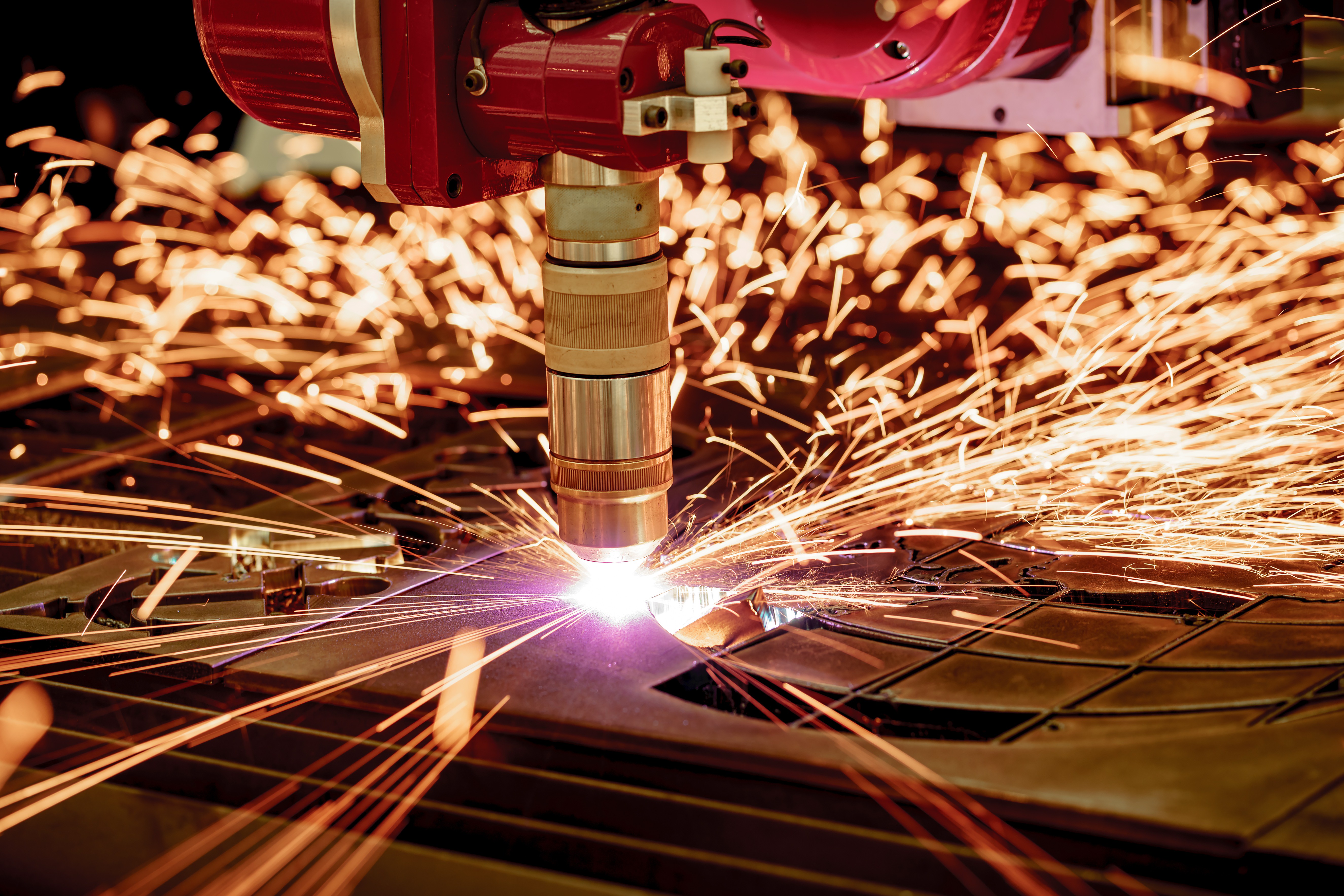
Choosing the right laser cutting machine is critical for efficiency, precision, and long-term ROI in today’s competitive manufacturing landscape. Whether you're an operator optimizing daily throughput, a technical evaluator comparing specs, a decision-maker aligning capex with strategic goals, or a maintenance professional prioritizing uptime and serviceability—this guide cuts through the noise. In 2025, advancements in fiber laser technology, intelligent nesting software, and Industry 4.0 integration mean not all laser cutting machine options deliver equal value. We break down key selection criteria—from material types and thickness ranges to automation readiness and total cost of ownership—so you invest confidently in the system that truly fits your workflow.
Material Compatibility & Thickness Requirements Define Your Baseline
No two fabrication shops process identical materials—and your laser cutting machine must reflect that reality. Carbon steel, stainless steel, aluminum, brass, copper, titanium, and even composites each interact differently with laser energy due to variations in thermal conductivity, reflectivity, and melting point. For instance, uncoated copper reflects over 95% of 1064 nm fiber laser light, demanding higher peak power and specialized beam delivery optics to initiate stable cutting. Meanwhile, thick-section stainless (e.g., 25 mm) requires precise assist gas pressure control and nozzle standoff management to avoid dross formation.
A common oversight is evaluating only nominal thickness capability without validating real-world cut quality across your actual production mix. A laser cutting machine rated for “up to 30 mm carbon steel” may achieve that under lab conditions—but at 25 mm, edge squareness could drop to ±0.2°, surface roughness may exceed Ra 12.5 µm, and cycle time might double versus 15 mm. Always request sample parts cut on candidate systems using your exact alloy grades, temper conditions, and surface finishes (e.g., pickled vs. hot-rolled).
The table below summarizes typical performance benchmarks for modern 6–12 kW fiber laser cutting machines across common industrial metals:
Automation Readiness: From Standalone Units to Seamless Line Integration
In 2025, a laser cutting machine is rarely an island. It’s expected to feed downstream bending, welding, or assembly cells—often within tight takt time windows. That means evaluating not just cutting speed, but load/unload cycle time, pallet changer capacity, part sorting logic, and API-level compatibility with MES or SCADA platforms. Operators benefit from intuitive HMI interfaces with one-touch job recall; technical evaluators need documented OPC UA or MTConnect support; and maintenance teams require remote diagnostics access and predictive alerts for consumables like nozzles and lenses.
True automation readiness extends beyond hardware. Consider nesting software integration: Does the laser cutting machine accept native DXF/SVG imports—or does it require proprietary pre-processing? Can it dynamically adjust kerf compensation based on real-time temperature drift? Does its CNC controller support multi-head synchronization for simultaneous cutting and marking? Leading systems now embed AI-driven feature recognition to auto-detect holes, slots, and bends—reducing programming time by up to 40% per job.
Also assess physical footprint flexibility. Some high-speed laser cutting machine configurations include integrated stackers capable of handling 10-ton raw material loads, while others prioritize compact gantry designs for retrofit into constrained floor spaces. Confirm minimum aisle width, crane hook height clearance, and electrical service requirements early—these often dictate installation feasibility more than cutting specs alone.
Total Cost of Ownership: Look Beyond the Sticker Price
A laser cutting machine purchase involves five distinct cost categories: acquisition, operation, maintenance, downtime, and obsolescence. Acquisition cost—the upfront price—is often less than 40% of five-year TCO. Energy consumption accounts for 25–35%, especially with older CO₂ lasers consuming 3–5× more electricity per watt of output than modern fiber sources. Consumables—including nozzles, lenses, shielding gas, and electrodes—add another 10–15%. Preventive maintenance contracts typically run $8,000–$15,000/year, while unplanned downtime averages $12,000/hour in high-mix environments (per Deloitte 2024 Manufacturing Operations Index).
Evaluate lifecycle economics rigorously. For example, a 6 kW fiber laser cutting machine may cost 18% more than a comparable 4 kW model—but if it reduces average cycle time by 32% and extends lens life by 2.5× due to superior beam delivery stability, payback occurs in under 14 months. Likewise, systems with modular laser sources allow power upgrades without replacing the entire machine—future-proofing against evolving part complexity.
Ask vendors for a validated TCO model covering your projected annual workload. Reputable suppliers provide granular breakdowns: kWh/kW-hour consumed, gas flow rates per material/thickness, mean time between failures (MTBF) for motion components, and historical field data on consumable replacement intervals—not just theoretical specs.
Service Infrastructure & Technical Support: The Hidden Differentiator
Even the most advanced laser cutting machine delivers zero ROI when idle. Downtime isn’t just about component failure—it’s about response time, spare parts availability, technician certification depth, and software update cadence. Verify whether local service engineers hold OEM-certified Level III qualifications (per ISO 9712), and whether firmware updates are delivered via secure OTA channels or require manual USB intervention.
Maintenance professionals should audit service SLAs carefully. Does “24/7 support” mean phone-only triage—or guaranteed on-site arrival within 8 business hours? Are critical spares (e.g., servo drives, CNC controllers) stocked regionally or shipped from overseas hubs? One Tier-1 manufacturer reports 92% first-time fix rate for laser source issues—but only when paired with certified optics calibration tools and cloud-based spectral analysis logs.
Also examine training depth. Operator certification shouldn’t stop at basic jog-and-cut functions. Look for curriculum covering beam path alignment verification, plasma-assisted piercing protocols, and real-time power meter validation procedures. Comprehensive training reduces human-error-related incidents by up to 67%, according to a 2023 SME benchmark study.
Conclusion: Align Technology With Workflow Reality
Selecting the right laser cutting machine demands cross-functional alignment—not just matching specs to a datasheet. It requires operators to validate ergonomics and repeatability; technical evaluators to stress-test software interoperability and thermal stability; decision-makers to model TCO across product lifecycles; and maintenance teams to confirm service architecture resilience. In 2024, the highest-performing systems combine high-brightness fiber sources, adaptive motion control, embedded process monitoring, and open connectivity—all calibrated to your specific material mix, volume profile, and uptime expectations.
There is no universal “best” laser cutting machine—only the best fit for your operational DNA. Prioritize vendors who conduct onsite workflow audits before quoting, offer performance-guaranteed pilot runs, and back their claims with verifiable field data—not just laboratory benchmarks. When every minute of machine time impacts delivery commitments and customer satisfaction, due diligence isn’t optional—it’s foundational.
Ready to evaluate your next laser cutting machine with engineering-grade insight? Get a customized workflow assessment and ROI projection—no obligation, no sales pitch.
Leave A Reply
LOGO
This stunning beach house property is a true oasis, nestled in a serene coastal community with direct access to the beach.
Opening Hours
Monday - Friday : 9AM to 5PM
Sunday: Closed
Closed during holidays
Contact
West Street, Melbourne Victoria 3000 Australia